Xylo Watch
Personal Project
2015

Bristol, UK
My Role:
Concept, Industrial Design, Fabrication
Tools Used:
Laser Cutting, Machining, 3D Printing, CAD, Illustrator, Keyshot
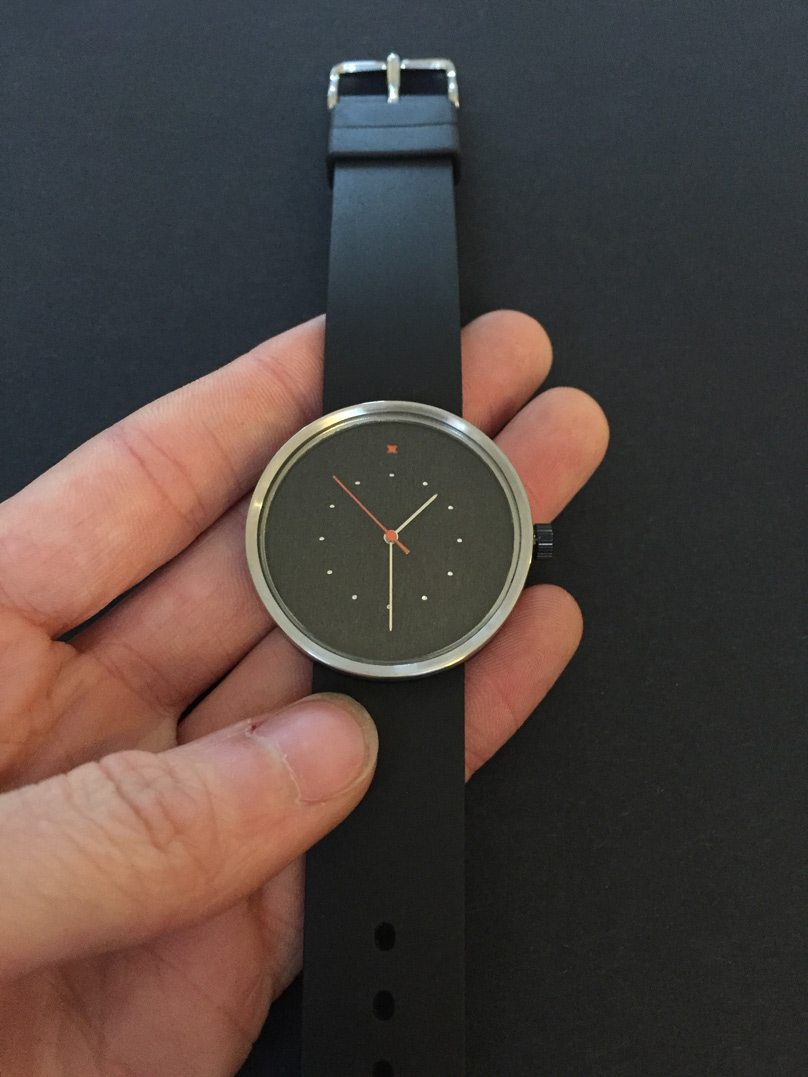
A personal project, conceived during my time at Dyson, with the aim of experimenting with colour, texture and materials to produce a set of distinctive timepieces. As my day job at the time was focused on the functional aspects of design, this project allowed me to explore the aesthetic side.
Having learned to use metalwork mills & lathes in my Dyson role, I was keen to see what I could make with these new skills, and came up with a concept for a clean, minimalist watch design with an unusual twist: a wooden dial.
(The name Xylo comes from the Greek xýlon, which simply means “wood”. Apparently this is where we get the word "xylophone".)

A personal project, conceived during my time at Dyson, with the aim of experimenting with colour, texture and materials to produce a set of distinctive timepieces. As my day job at the time was focused on the functional aspects of design, this project allowed me to explore the aesthetic side.
Having learned to use metalwork mills & lathes in my Dyson role, I was keen to see what I could make with these new skills, and came up with a concept for a clean, minimalist watch design with an unusual twist: a wooden dial.
(The name Xylo comes from the Greek xýlon, which simply means “wood”. Apparently this is where we get the word "xylophone".)